BMW i3 2025
Ce qu'il faut retenir
Autonomie
310 km WLTP
Batterie
22–42 kWh
Puissance
170–184 ch
0–100 km/h
7.9s 0–100 km/h
Recharge rapide
50 kW DC
Prix
dès 39 950 €
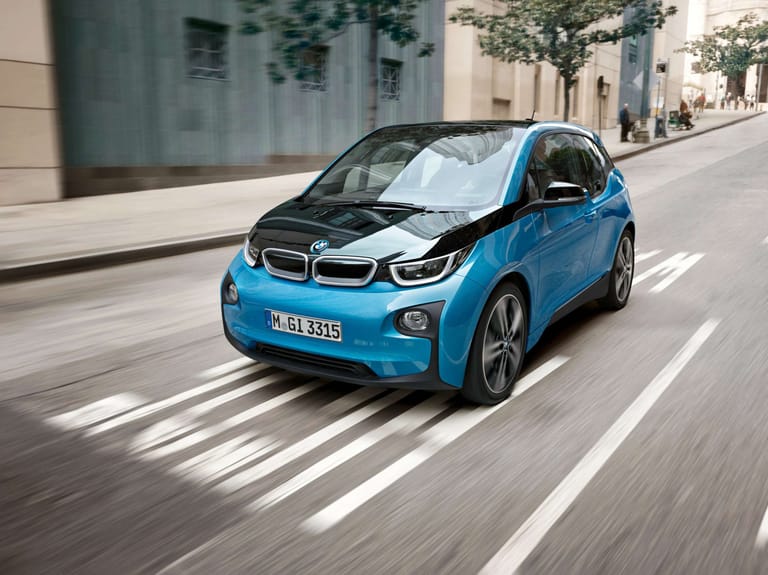
The i3 closes the door on an era. Launched in 2013, this electric hatchback marked BMW's entry into the zero-emission mobility market with a singular approach: lightness, modularity and avant-garde design. As it approaches final discontinuation, the 2025 i3 retains its fundamentals: a 170 hp electric motor, batteries up to 42 kWh offering up to 310 km WLTP range, and a philosophy centered on urban use. The question remains whether its proposition remains relevant against competition radically transformed over twelve years.
Design and livability
The 2025 i3 retains its characteristic silhouette: compact body, rear doors without center pillar, and distinctive aerodynamic profiling. With weight controlled at 1,195 kg, the hatchback prioritizes energy efficiency over mass. The use of recycled carbon composite materials reinforces this lightweight approach while asserting a timeless visual identity.
The interior reflects an assumed minimalist philosophy. Urban living space takes priority over long-distance comfort. Limited storage and cramped rear passenger space clearly reflect the vehicle's primary destination: metropolitan trips. Interior modularity, while efficient, cannot rival compact monospaces or SUVs from the same period.
Engine and performance
All 2025 models share the same electric motor: 125 kW (170 hp) and 250 Nm constant torque from startup. This uniform power contrasts with the three-tier battery offering, highlighting that BMW deliberately limited raw performance. Acceleration from 0 to 100 km/h in 7.9 seconds (Atelier version) proves adequate for urban use, while top speed is limited to 150 km/h.
Rear-wheel drive ensures balanced weight distribution and agile handling, a major asset in the city. However, the absence of more powerful variants (except the i3s with 184 hp) reflects a coherent but unambitious product strategy against competitors offering more character.
Range and charging
The 2025 lineup offers three lithium-ion battery configurations: 22 kWh (160 km WLTP), 33 kWh (200 km) and 42 kWh (310 km). The latter represents the culmination of gradual evolution since 2013 and constitutes the genuine qualitative leap at end of life. Real-world range in urban cycle typically exceeds WLTP values, a substantial advantage for a hatchback.
DC charging reaches 50 kW across all versions, allowing 80% recovery in approximately 35 to 40 minutes. AC charging improves: 7 kW on base model (Atelier 22 kWh), 11 kW on higher versions. Energy recovery during braking, potentially restoring up to 50 kW, optimizes overall energy efficiency. These figures remain solid for 2025 without matching new entrants' performance.
Equipment and technology
The 2025 i3 integrates a tablet-style control screen, an emblematic interface for several generations. Connected navigation displays remaining range in real time and proposes routing incorporating charging stations. Connected services operate via an embedded SIM card, guaranteeing OTA updates and telemetry independent of the user's phone.
ECO PRO and ECO PRO+ driving modes allow adjustment of energy recovery and motor assistance based on conditions. These tools optimize range according to road profile. However, the absence of details on driver assistance systems (ADAS) comparable to rivals and less evolved interface than some competitors represent a palpable drawback at end of product cycle.
Versions & Prix
i3 Atelier 22 kWh
39 950 €
- Batterie : 22 kWh
- Autonomie : 160 km WLTP
- Puissance : 170 ch (125 kW)
- Couple : 250 Nm
- 0–100 km/h : 7.9 s
- V max : 150 km/h
- Recharge DC : 50 kW
- Recharge AC : 7 kW
- Transmission : Propulsion
i3 33 kWh
- Batterie : 33 kWh
- Autonomie : 200 km WLTP
- Puissance : 170 ch (125 kW)
- Couple : 250 Nm
- 0–100 km/h : 7.9 s
- V max : 150 km/h
- Recharge DC : 50 kW
- Recharge AC : 11 kW
- Transmission : Propulsion
i3 Atelier 42 kWh
39 950 €
- Batterie : 42 kWh
- Autonomie : 310 km WLTP
- Puissance : 170 ch (125 kW)
- Couple : 250 Nm
- 0–100 km/h : 7.9 s
- V max : 150 km/h
- Recharge DC : 50 kW
- Recharge AC : 11 kW
- Transmission : Propulsion
i3s 42 kWh
- Batterie : 42 kWh
- Autonomie : 310 km WLTP
- Puissance : 184 ch (125 kW)
- Couple : 250 Nm
- V max : 150 km/h
- Recharge DC : 50 kW
- Recharge AC : 11 kW
- Transmission : Propulsion
Notre verdict
The 2025 i3 remains an efficient and agile urban electric hatchback, but its pricing (€39,950) makes it less competitive against rivals like the Peugeot e-208 or Renault 5 E-Tech, which offer greater versatility and connectivity at comparable prices.
Excellent in urban use, limited comfort on long trips; minimalist but efficient interior, correct German finishing without perceived luxury.
Solid navigation and connected services, practical driving modes, but notable absence of modern ADAS and aging interface.
High positioning for a city car, justified by the brand and technology, but less appealing compared to the versatile alternatives on the 2025 market.
Points positifs
- + Range: up to 310 km WLTP in the 42 kWh version, ideal for daily urban use and periurban trips
- + Maneuverability: very agile compact hatchback easy to park thanks to its compact dimensions and rear-wheel drive
- + Energy efficiency: lightweight architecture (1,195 kg) and composite materials optimize consumption compared to rivals
- + Fast charging: 50 kW DC and 11 kW AC charging cover standard urban needs
- + Electric dynamics: immediate torque and 0-100 km/h in 7.9 seconds deliver a pleasant driving experience in the city
Points négatifs
- – Limited range: only 160 km in the 22 kWh version, unsuitable for frequent interurban trips
- – Rear passenger space: cramped rear seats and 260-360 L trunk, impractical for families
- – Top speed: 150 km/h limitation restricts highway journeys compared to unrestricted rivals
- – Technology: equipment and interface less updated than 2025 competition (e-208, e-C3)
- – Aggressive pricing: at €39,950 for base model, less competitive than alternatives offering more space and features
FAQ
- What is the 2025 i3's range?
- Between 160 km (22 kWh battery WLTP) and 310 km (42 kWh battery WLTP). In real urban use, range often exceeds these figures thanks to energy recovery during braking.
- How much does the 2025 i3 cost?
- From €39,950 for the i3 Atelier 22 kWh. Pricing rises to €45,550 for higher versions with the 42 kWh battery, prices including VAT before subsidies or penalties.
- How long does it take to charge the 2025 i3?
- On a 50 kW DC fast charger, allow approximately 35 to 40 minutes to go from 10% to 80% battery. On an AC outlet (7 to 11 kW depending on version), 3 to 5 hours for a full charge.
- What battery does the 2025 i3 have?
- Three lithium-ion options: 22 kWh, 33 kWh or 42 kWh. The latter, with a gross capacity of 42 kWh, offers the best range and is the recommended solution for versatile use.
- What are the dimensions of the 2025 i3?
- BMW no longer provides precise dimensions for this end-of-life model. Maximum weight is 1,195 kg, confirming a compact and lightweight hatchback in its category.