Volkswagen ID.4 2020
Ce qu'il faut retenir
Autonomie
520 km WLTP
Batterie
52–77 kWh
Puissance
148–299 ch
0–100 km/h
6.2s 0–100 km/h
Recharge rapide
150 kW DC
Prix
dès 42 400 €
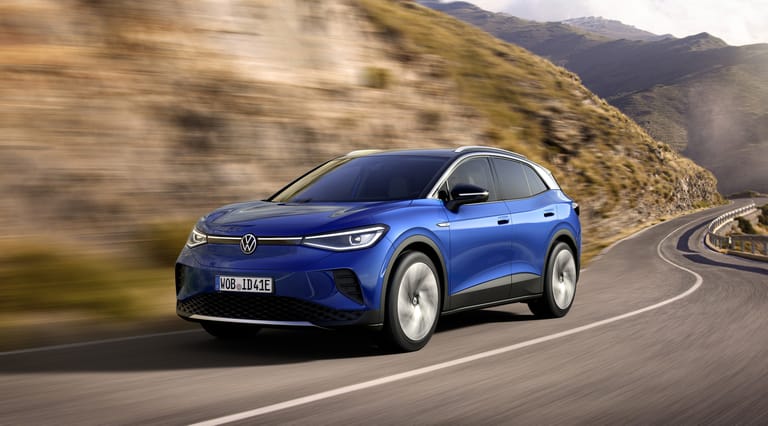
The ID.4 positions Volkswagen in the accessible compact SUV segment. Launched in 2020, this model targets customers seeking a utility vehicle without major compromises on range or practicality. Built on the MEB platform shared with the ID.3, the ID.4 offers a range scaled across three battery options and seven power variants, from 109 kW to 220 kW. Listed prices—from €42,400 in Pure version to €50,450 for Pro Performance—put it in direct competition with discontinued combustion vehicles and first-generation mainstream electric SUVs. The 543-liter trunk, expandable to 1,575 liters, confirms its practical positioning.
Design and livability
The ID.4 adopts the formal language of modern SUVs: compact 4,580 mm long bodywork, clean lines, LED front and rear lights. The 21-centimeter ground clearance ensures comfortable accessibility without sacrificing aerodynamics. Proportions favor interior livability, though Volkswagen does not communicate precise width or height dimensions.
Modularity remains an asset: the 543-liter trunk expands to 1,575 liters when rear seats are folded. This space easily accommodates groceries or leisure equipment, a necessity for this class. Perceived finish quality remains basic on Pure, with hard plastics, while higher versions benefit from softer fabrics and refined colors.
Engine and performance
The ID.4 offers three power levels: 109 kW (148 hp) for Pure, 125 kW (170 hp) for Pure Performance, then 150 kW (204 hp) for Pro and Pro Performance versions. At the top, the GTX variant (220 kW, 299 hp) with all-wheel drive delivers 6.2 seconds 0-100 km/h. Pro 4Motion also integrates all-wheel drive at 195 kW (265 hp).
Top speeds cap at 160 km/h for standard versions and 180 km/h for the GTX. Performance is measured: most buyers will experience smooth rather than spirited acceleration. This engine hierarchy lets everyone calibrate their budget according to dynamic expectations.
Range and charging
Two battery capacities structure the lineup: 52 kWh (Pure and Pure Performance) delivering 345 km WLTP, and 77 kWh (Pro, Pro Performance, Pro 4Motion, GTX) promising 520 km WLTP. The GTX, despite increased power and all-wheel drive, drops to 480 km due to weight and additional consumption.
DC charging reaches 50 kW on the 52 kWh and 135 to 150 kW on the 77 kWh. On AC, power climbs to 7.2 kW (Pure) or 11 kW (Pure Performance onwards). On 2.3 kW home socket, a full 77 kWh battery charge takes approximately 33 hours; on 11 kW wallbox, approximately 7 hours. Rapid DC charging brings 10 to 80% in thirty to forty minutes depending on temperature conditions.
Equipment and technology
Volkswagen equips the ID.4 with its Android Automotive-based infotainment system (depending on model year and market). Main touchscreen, smartphone connectivity, and digital services integration form the technological pillars. Driver aids (adaptive cruise control, lane keeping) are included, with variations by trim level.
The MEB platform enables over-the-air (OTA) software updates. No information provided on Vehicle-to-Load (V2L) capability or bidirectional charging ports. The absence of detailed equipment data suggests a classical tiered approach, with paid options for air conditioning, heated seats, or panoramic roof.
Versions & Prix
Pure
42 400 €
- Batterie : 52 kWh
- Autonomie : 345 km WLTP
- Puissance : 148 ch (109 kW)
- V max : 160 km/h
- Recharge DC : 50 kW
- Recharge AC : 7.2 kW
- Transmission : Propulsion
Pure Performance
44 000 €
- Batterie : 52 kWh
- Autonomie : 345 km WLTP
- Puissance : 170 ch (125 kW)
- V max : 160 km/h
- Recharge DC : 50 kW
- Recharge AC : 7.2 kW
- Transmission : Propulsion
Pro
48 850 €
- Batterie : 77 kWh
- Autonomie : 520 km WLTP
- Puissance : 204 ch (150 kW)
- 0–100 km/h : 8.5 s
- V max : 160 km/h
- Recharge DC : 135 kW
- Recharge AC : 11 kW
- Transmission : Propulsion
Pro Performance
50 450 €
- Batterie : 77 kWh
- Autonomie : 520 km WLTP
- Puissance : 204 ch (150 kW)
- 0–100 km/h : 8.5 s
- V max : 160 km/h
- Recharge DC : 135 kW
- Recharge AC : 11 kW
- Transmission : Propulsion
Pro 4Motion
- Batterie : 77 kWh
- Autonomie : 520 km WLTP
- Puissance : 265 ch (195 kW)
- V max : 160 km/h
- Recharge DC : 135 kW
- Recharge AC : 11 kW
- Transmission : Intégrale
GTX
44 700 €
- Batterie : 77 kWh
- Autonomie : 480 km WLTP
- Puissance : 299 ch (220 kW)
- 0–100 km/h : 6.2 s
- V max : 180 km/h
- Recharge DC : 150 kW
- Recharge AC : 11 kW
- Transmission : Intégrale
Notre verdict
The ID.4 is a versatile and affordable electric SUV that excels in its segment by offering generous range, fast charging, and excellent value for equipment. It's the ideal choice for families seeking their first practical electric vehicle without major compromises.
Points positifs
- + Generous range of 345-520 km WLTP covering all daily use and occasional long trips.
- + Highly competitive pricing from €42,400 for a reliable electric SUV backed by Volkswagen warranty.
- + Fast charging up to 150 kW DC enabling 80% in 30 minutes on highways.
- + Spacious 543 L trunk ideal for families and luggage, meeting SUV segment expectations.
- + Progressive power from 148 to 299 hp to balance energy efficiency and performance.
Points négatifs
- – Base Pure version with 148 hp offers moderate acceleration, not dynamic for an urban SUV.
- – AC charging limited to 11 kW: approximately 9 hours for 80% on 52 kWh battery with home installation.
- – 345 km range on Pure version barely sufficient, requires planning on very long journeys.
- – Basic trim on entry-level with hard plastics and limited equipment compared to competitors.
- – No all-wheel drive on entry versions: front-wheel drive only on rough terrain or snow.
FAQ
- What is the ID.4's range?
- It depends on the battery: 345 km WLTP for the 52 kWh battery (Pure, Pure Performance) and 520 km WLTP for the 77 kWh (Pro, Pro Performance, Pro 4Motion). The GTX, despite more power, drops to 480 km due to increased weight.
- How much does the ID.4 cost?
- Pricing starts at €42,400 for the Pure version (52 kWh, 109 kW). Pure Performance is priced at €44,000, Pro versions at €48,850, and Pro Performance at €50,450. The GTX (220 kW, all-wheel drive) was announced at €44,700 at launch.
- How long does it take to charge the ID.4?
- On 2.3 kW home AC charging: 33 hours for a full 77 kWh battery. On 11 kW wallbox: approximately 7 hours. On rapid DC charging, 10 to 80% is achieved in 30 to 40 minutes depending on temperature and available power (50 to 150 kW).
- What battery does it have?
- Two options: 52 kWh (Pure and Pure Performance) with estimated usable capacity around 50 kWh, and 77 kWh (Pro, Pro Performance, Pro 4Motion, GTX) with estimated usable capacity around 75 kWh. No details provided on chemistry or supplier.
- What are its dimensions?
- Length: 4,580 mm. Width, height, and wheelbase are not precisely communicated. The trunk offers 543 liters in standard configuration and up to 1,575 liters with rear seats folded. Ground clearance: 21 centimeters.