BMW iX3 2025
Ce qu'il faut retenir
Autonomie
460 km WLTP
Batterie
74 kWh
Puissance
286 ch
0–100 km/h
6.8s 0–100 km/h
Recharge rapide
150 kW DC
Prix
dès 69 950 €
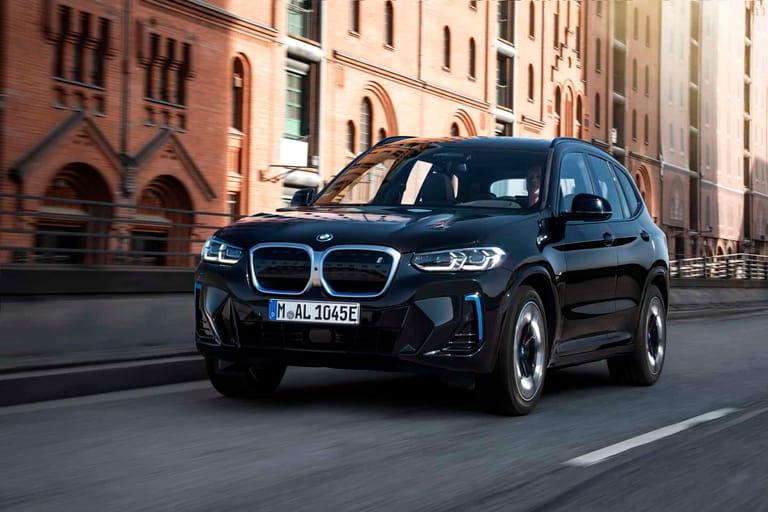
The BMW iX3 occupies a well-defined segment: that of the compact electric SUV displaying premium ambitions without crossing into extreme luxury. Marketed since 2020 and regularly refined, this model targets buyers seeking an electric alternative to the gas-powered BMW X3, with a contained footprint and a promise of controlled performance. Two trims structure the lineup, based on shared architecture: a 74 kWh battery (NMC-811), a rare earth-free electric motor and progressive standard equipment. The iX3 does not aim to impress with raw power, but rather to embody a pragmatic electric transition for urban and suburban families.
Design and Habitability
The iX3 adopts the Bavarian brand's visual codes: closed honeycomb grille, integrated adaptive LED headlights, and bodywork with clean lines. The SUV displays a robust silhouette without visual excess. Inside, the dashboard emphasizes simplicity, with a central touchscreen and physical controls retained on the steering stalks. The 510-liter trunk proves practical for daily use, though limited for long trips with heavy cargo. Front heated seats feature in the equipment catalog, while dual-zone climate control ensures appropriate thermal regulation. The 2,200 kg weight reflects the construction density inherent in current batteries.
Rear legroom remains adequate for short to medium trips, consistent with the compact SUV category. Material quality and assembly meet BMW standards, though without reaching the finishes of higher-tier iX models. Controls remain intuitive, particularly for the energy recovery systems available in four distinct modes.
Powertrain and Performance
The technical heart relies on a rare earth-free electric motor developing 210 kW (286 hp) and 400 Nm of torque. These figures place the iX3 in the upper-middle of the segment: sufficient for urban overtaking and highway acceleration without aggression. The 0 to 100 km/h sprint takes 6.8 seconds, honest performance without being spectacular. Top speed caps at 180 km/h, a logical limitation to favor energy efficiency. Rear-wheel drive offers better weight distribution than front-wheel drive, though the absence of electrons at the front wheels can expose the driver to pronounced understeer under significant lateral demand. Energy recovery offers four intensity levels: welcome modularity to adapt regenerative braking to traffic conditions.
Range and Charging
The 74 kWh battery displays a certified WLTP range of 460 km under standard conditions. This figure must be weighted: winter trips or constant highway speed significantly reduce this range, with possible losses around 15 to 25%. The iX3 is therefore not suitable for long daily commutes without intermediate charging points. The useful capacity of the NMC-811 battery provides correct energy density for technology maturity.
For charging, rapid DC charging reaches 150 kW, allowing 10 to 80% refilling in approximately 30 to 35 minutes at an appropriate charger. Alternating current charging caps at 11 kW, bringing home charging time to about 7 hours on a hardwired outlet. These rates remain standard against direct segment competitors. Fast charging infrastructure in Europe, while progressing, remains uneven by region.
Equipment and Technology
The iX3 integrates BMW's adaptive LED headlights, proven technology allowing contrast between low and high beams without driver intervention. The infotainment system offered remains BMW's, with smartphone connectivity and onboard navigation. The two trims (Inspiring and Impressive) differ mainly in comfort and convenience equipment: heated seats standard on base version, with progressive additions in audio and safety systems.
Driver assistance systems integrate modern standards: adaptive cruise control, unintentional lane departure alert. Lack of specific data on V2L (Vehicle-to-Load) or V2G (Vehicle-to-Grid) systems limits the ability to fully exploit battery potential as an auxiliary energy source. Connectivity interfaces remain conventional for the segment, without major innovation.
Versions & Prix
Inspiring
69 950 €
- Batterie : 74 kWh (NMC)
- Autonomie : 460 km WLTP
- Puissance : 286 ch (210 kW)
- Couple : 400 Nm
- 0–100 km/h : 6.8 s
- V max : 180 km/h
- Recharge DC : 150 kW
- Recharge AC : 11 kW
- Transmission : Propulsion
Impressive
76 350 €
- Batterie : 74 kWh (NMC)
- Autonomie : 460 km WLTP
- Puissance : 286 ch (210 kW)
- Couple : 400 Nm
- 0–100 km/h : 6.8 s
- V max : 180 km/h
- Recharge DC : 150 kW
- Recharge AC : 11 kW
- Transmission : Propulsion
Notre verdict
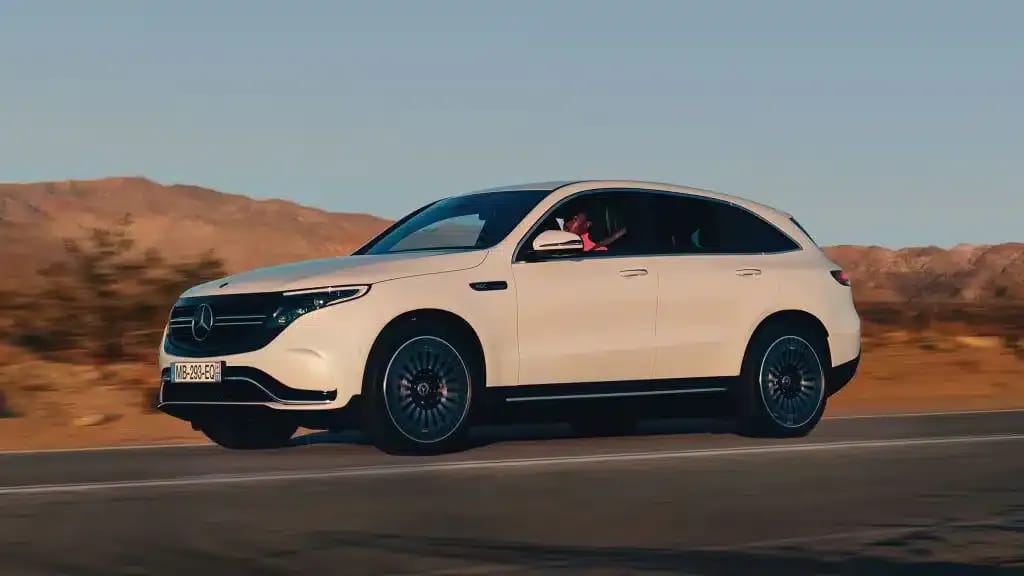
The BMW iX3 is a solid compact premium electric SUV, offering respectable 460 km range and fast 150 kW charging for mixed journeys. Positioned at €70-76k, it competes effectively with the Mercedes EQC and Audi Q4 e-tron, appealing to buyers seeking German reliability and electrified SUV comfort. A balanced choice for regular urban and suburban mobility, without compromise on dynamics.
General livability without superfluous luxury, appreciated heated seats, but constrained rear space and modest trunk limit the score.
Adaptive headlights and standard assistance systems of good quality, but no V2L/V2G and conventional infotainment without distinctive features.
Acceptable entry price for a German electric SUV, but the minimal difference between trim levels and limited range relative to the competition temper the perceived value.
Points positifs
- + WLTP range of 460 km covering daily and intercity trips without stress.
- + Fast DC charging at 150 kW allowing recovery of 80% in under 35 minutes.
- + BMW quality with premium interior, adaptive LED headlights and refined finishes.
- + Spacious 510 L trunk adapted to family SUV needs.
- + 0-100 acceleration in 6.8 s sufficient for a compact premium electric SUV.
Points négatifs
- – Real winter range reduced by 20-25% in cold conditions or on highways.
- – Single RWD motor without AWD option for better traction in difficult conditions.
- – AC charging limited to 11 kW, requiring 7-8 hours for full home charge.
- – €6,400 price gap between entry-level and top trim without technical difference.
- – Public charging network less dense in Europe than with established German rivals.
FAQ
- What is the iX3's range?
- The iX3 delivers a certified WLTP range of 460 km with the 74 kWh battery. In practice, this range can decrease by 15 to 25% during winter trips or at constant highway speed, reducing real-world range to approximately 345 to 390 km depending on conditions.
- How much does the iX3 cost?
- The BMW iX3 starts at €69,950 in Inspiring trim, with an Impressive version priced at €76,350. This €6,400 gap corresponds to additional equipment, with motor and battery specifications remaining identical between the two versions.
- How long does it take to charge the iX3?
- With rapid DC charging up to 150 kW, charging from 10 to 80% takes approximately 30 to 35 minutes. With alternative 11 kW charging (hardwired home outlet), full charge time is about 7 hours. On a standard home outlet, this duration can reach 15 to 20 hours.
- What battery does the iX3 have?
- The 2025 iX3 uses a 74 kWh NMC-811 chemistry battery, rare earth-free. This battery enables energy recovery configured across four modes and supports rapid DC charging up to 150 kW. BMW does not disclose the exact usable capacity, but it represents nearly all of the 74 kWh nominal capacity.
- What are its dimensions?
- The iX3 weighs 2,200 kg. The trunk offers 510 liters of volume. Precise dimensions for length, width, height and wheelbase are not available in official BMW data provided, but the iX3 falls into the compact SUV category (equivalent to a gas-powered X3 in external footprint).